

The problem: good intentions often lead to exhaustion
Burnout is one of the most persistent and underestimated challenges in the nonprofit sector.
It affects organizers who carry responsibility for campaigns.
It affects volunteers who commit time beyond their capacity.
It affects donors who feel emotionally overwhelmed by constant urgency.
Social impact work is emotionally demanding by nature. It deals with real needs, real suffering, and real consequences.
When participation is driven only by urgency, guilt, or pressure, engagement becomes unsustainable.
Crowdfunding for good campaigns often rely on emotional peaks. Online volunteering can attract enthusiastic participation in the beginning. Micro-volunteering may generate quick responses.
But without deeper alignment, people disengage.
Burnout does not occur because people care too much.
It occurs because participation lacks structure, clarity, and values alignment.
Why urgency-driven systems exhaust communities
Many nonprofit initiatives are built around crisis response.
Emergency fundraising.
Short deadlines.
High emotional intensity.
This model can mobilize quickly. But it also creates cycles of stress.
Supporters feel responsible for solving immediate problems. Volunteers feel pressure to contribute beyond their limits. Organizers feel alone in sustaining momentum.
When digital tools for nonprofits focus primarily on rapid response rather than long-term engagement, burnout accelerates.
Urgency activates participation. Values sustain it.
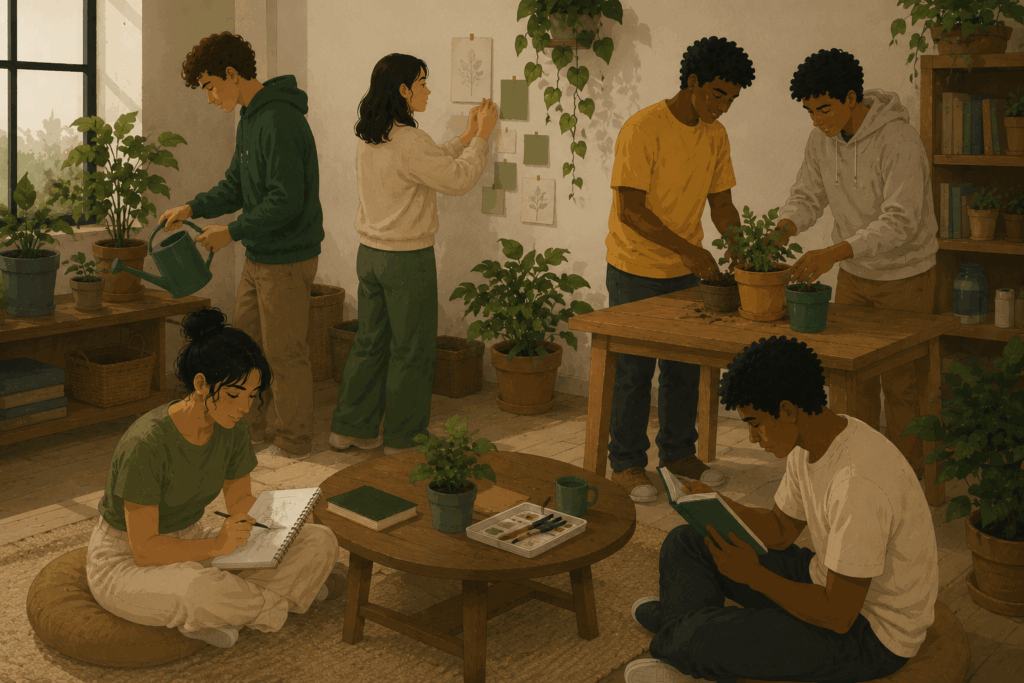
The difference between reaction and alignment
Participation driven by reaction often looks like:
- Donating impulsively
- Volunteering without clarity
- Sharing content without context
- Committing beyond realistic capacity
Participation driven by values looks different.
It involves:
- Understanding the mission clearly
- Choosing roles intentionally
- Setting sustainable contribution levels
- Engaging consistently rather than intensely
Values-driven participation aligns personal identity with collective purpose.
When individuals act from alignment rather than pressure, engagement becomes sustainable.
Clarity reduces emotional overload
One of the main drivers of burnout is ambiguity.
If supporters do not know:
- How funds are used
- What progress has been made
- What realistic expectations are
- How long initiatives will continue
they experience emotional fatigue.
Transparent nonprofit technology reduces this burden.
When projects provide visible milestones, clear timelines, and structured updates, participation becomes predictable rather than chaotic.
Deya supports this by integrating crowdfunding for good campaigns, milestone tracking, online volunteering coordination, and communication within one environment.
Clarity creates psychological stability.
Micro-volunteering as a sustainable entry point
Micro-volunteering is especially effective in preventing burnout.
Short, clearly defined tasks allow participants to contribute meaningfully without long-term pressure.
For example:
- Reviewing campaign materials
- Sharing updates with networks
- Assisting with digital organization
- Providing specific skill-based support
These contributions are manageable.
When individuals choose tasks aligned with their expertise and availability, participation strengthens rather than drains them.
Ways to help without money are essential not only for inclusion, but for sustainability.
They allow people to contribute within their capacity.
Shared responsibility distributes emotional weight
Burnout often occurs when responsibility is concentrated.
A small group of organizers handles communication, fundraising, coordination, and reporting.
Volunteers may depend on a few individuals to drive momentum.
When responsibility is shared, emotional weight decreases.
Distributed participation leads to:
- More stable workload
- Higher volunteer retention
- Reduced leadership exhaustion
- Stronger community engagement
Digital tools for nonprofits should enable this distribution.
Deya’s integrated ecosystem allows multiple roles to coexist within a structured framework.
When responsibilities are visible and participation pathways are clear, no single individual carries the entire burden.
Transparency builds emotional trust
Uncertainty increases stress.
When supporters are unsure whether their contributions matter, motivation weakens.
Transparent reporting reinforces emotional trust.
In areas such as animal shelter support, consistent updates on food supplies, veterinary costs, and volunteer activity reassure supporters that efforts are producing tangible results.
Trust reduces anxiety.
Anxiety reduction prevents burnout.
Transparency is not only an accountability mechanism. It is an emotional stabilizer.

Recurring engagement over emotional spikes
High-intensity campaigns can be effective in short bursts.
But sustainable social impact relies on recurring engagement.
Recurring micro-donations create predictable funding.
Ongoing online volunteering builds operational continuity.
Regular communication stabilizes expectations.
When participation follows a rhythm, communities avoid the exhaustion associated with constant crisis.
Deya’s nonprofit technology supports recurring structures within one integrated environment.
Consistency protects energy.
Psychological safety in community engagement
Burnout increases when people feel judged for setting limits.
Values-driven participation encourages healthy boundaries.
Supporters should feel comfortable:
- Contributing modestly
- Taking breaks
- Asking questions
- Offering feedback
Healthy ecosystems normalize realistic participation.
Community engagement should not feel like competition or obligation.
When organizations cultivate psychological safety, participants remain engaged longer.
Aligning technology with human limits
Technology can either intensify burnout or reduce it.
If platforms constantly push notifications, create urgency loops, and reward overcommitment, exhaustion follows.
If platforms prioritize clarity, transparency, and manageable contribution formats, sustainability improves.
Deya’s structure emphasizes visibility and integration rather than constant escalation.
Participants can see:
- Where they fit
- What progress looks like
- How much is needed
- How their role contributes
Understanding reduces stress.
Stress reduction protects long-term engagement.
Values-driven participation strengthens outcomes
When people engage from alignment rather than pressure, several outcomes improve:
- Retention increases
- Volunteer satisfaction improves
- Donor trust deepens
- Community collaboration strengthens
- Innovation emerges organically
Burnout weakens impact.
Values-driven systems protect it.
Nonprofit technology must reflect this philosophy.
It must support clarity, distribute responsibility, and maintain transparency.
Sustainable social impact begins with sustainable people
No initiative can succeed if its community is exhausted.
Preventing burnout is not about reducing ambition.
It is about designing systems that respect human limits.
Values-driven participation ensures that energy flows steadily rather than erupting and disappearing.
If you want to participate in initiatives that prioritize clarity, shared responsibility, and sustainable engagement, explore how Deya supports human-centered social impact.
Deya is not just technology. It’s a way to help - conveniently, transparently, and genuinely.