

People do not always stay on the sidelines because they do not care. Often, they stay there because participation is harder than it needs to be.
A person may genuinely want to support a community project but not know what is expected. Someone may be ready to volunteer but unable to commit an entire weekend. Another person may care about an initiative but assume that donating money is the only useful contribution.
These are not problems of motivation. They are problems of access.
For nonprofits, community initiatives, and social impact projects, accessibility is therefore much more than inclusive design or technical usability. It is about creating realistic ways for different people to participate with the time, skills, money, energy, and circumstances they actually have.
When participation becomes easier to understand and easier to enter, more people can move from caring to contributing.
The problem: wanting to help is not the same as being able to participate
Social projects often focus heavily on motivation. Campaigns try to make people care more, feel more strongly, or understand the urgency of a problem.
But motivation is only one part of participation.
Imagine someone sees a project improving a neglected public space. They like the idea and would happily contribute. Then they discover that volunteering requires registration, a fixed four-hour shift, travel across the city, and attendance at a specific time.
The person closes the page.
Now imagine another project needs help preparing educational materials. A potential volunteer has exactly the right skills, but the request simply says, "We need volunteers." There is no explanation of the task, deadline, expected time commitment, or required experience.
Again, someone who could have helped does nothing.
From the outside, this can look like apathy. In practice, the barrier was structural.
Participation has more barriers than we usually notice
Accessibility is often discussed in physical or technical terms, and those dimensions are essential. But participation in social projects can be limited by many less visible barriers.
People may hesitate because of:
- Time barriers: the opportunity requires more hours than they can realistically give.
- Financial barriers: participation requires transportation, equipment, or other personal expenses.
- Geographic barriers: the person lives too far from the project.
- Information barriers: it is unclear what needs to be done or how to begin.
- Skill barriers: people assume they are not qualified enough to contribute.
- Emotional barriers: the problem feels too large, serious, or overwhelming.
- Digital barriers: registration or communication is unnecessarily complicated.
- Commitment barriers: a small action appears to come with an undefined long-term obligation.
None of these necessarily mean someone is unwilling to help.
Sometimes the difference between participation and non-participation is simply whether the project offers a manageable first step.
Accessibility starts with clarity
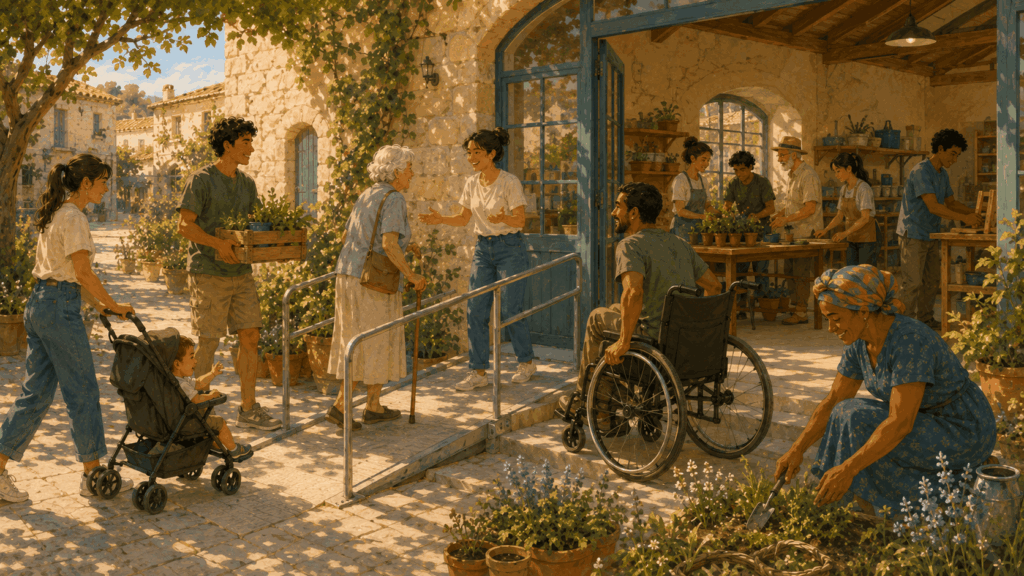
One of the simplest forms of accessibility is also one of the most overlooked: clear information.
"Support our initiative" sounds positive, but it leaves the reader with work to do. Support it how? How much time is needed? Does the project need money? Volunteers? Professional expertise? Materials? Sharing?
A stronger invitation might explain that the project needs three people to help for two hours, a designer to prepare one poster, someone to translate a short document, or small contributions toward a clearly defined fundraising goal.
The more specific the request, the easier it becomes for someone to recognize where they fit.
Good participation design answers basic questions quickly:
- What is happening?
- What is needed?
- Why does it matter?
- How can I contribute?
- How much time, money, or effort does it require?
- What will happen after I participate?
Clarity reduces uncertainty. And reducing uncertainty makes action easier.
Not everyone needs to participate in the same way
One of the biggest limitations of traditional participation models is the assumption that there should be one standard way to help.
But people have different resources.
One person has money but very little free time. Another has time but cannot donate. Someone else has professional expertise. Another person has useful local contacts. Someone living hundreds of kilometers away may be able to help online but not physically.
Accessible community engagement recognizes these differences rather than treating them as obstacles.
A local project might need financial contributions through crowdfunding for good, volunteers who can work on site, people who can help remotely, and supporters willing to spread information.
All of these actions can serve the same goal.
That is why ways to help without money are particularly important. If every request ends with a donation button, a large group of potential participants is effectively excluded even though they may have valuable resources to offer.
Micro-volunteering makes the first step smaller
The traditional image of volunteering often involves a significant commitment: regular shifts, ongoing responsibilities, training, meetings, or hours of work.
Those forms of volunteering remain essential. But they cannot be the only option.
Micro-volunteering breaks participation into smaller, specific tasks. Someone might spend twenty minutes proofreading a text, half an hour researching information, an hour helping with translation, or a few minutes sharing a project with a relevant community.
Individually, these actions may appear small.
Collectively, they can remove dozens of tasks from an overloaded nonprofit team.
More importantly, micro-volunteering lowers the psychological cost of starting.
A person does not have to decide, "Am I ready to become a volunteer?"
They only have to decide, "Can I help with this?"
That is a much easier question to answer.
Online volunteering removes geography from many tasks
Physical volunteering will always matter. Food needs to be delivered, community spaces need to be repaired, animals need direct care, events need people on site.
But much of the work surrounding these activities can happen remotely.
Online volunteering can include communication, design, translation, research, mentoring, fundraising support, administration, content creation, technical assistance, and many other tasks.
Consider animal shelter support. Feeding animals or transporting them to a veterinarian requires someone nearby. But creating fundraising materials, translating adoption posts, editing photographs, preparing social media content, or researching potential partners can happen almost anywhere.
Digital participation allows the local and remote parts of the same initiative to work together.
For smaller organizations in particular, this can expand the pool of available skills far beyond their immediate community.
Accessible participation respects people's capacity
There is another dimension of accessibility that social projects sometimes overlook: emotional capacity.
People are constantly exposed to difficult stories, emergencies, fundraising appeals, humanitarian needs, environmental problems, and requests for support.
The natural response is not always increased action. Sometimes it is withdrawal.
When every message suggests that the problem is enormous and every contribution feels insufficient, people can begin to believe there is little point in doing anything.
Accessible participation offers a different experience.
Instead of saying, "Everything is urgent and we need everyone to do more," a project can say, "Here is one specific thing that would help right now."
That distinction is important.
Participation becomes something a person can realistically complete rather than another responsibility they feel guilty about avoiding.
Technology should reduce friction, not create more of it
This is where digital tools for nonprofits and thoughtful nonprofit technology can make a significant difference.
Technology is useful when it simplifies the path between intention and action. It becomes counterproductive when people need to navigate multiple websites, forms, chats, spreadsheets, payment systems, and social media accounts just to understand what is happening.
Good digital infrastructure can bring several elements together: the project itself, its goals, fundraising, volunteer needs, updates, and community participation.
The purpose is not technology for its own sake.
The purpose is making action easier.
A well-designed digital environment should help someone understand a project quickly, identify a contribution that fits their capacity, participate without unnecessary friction, and later see what happened.
That final part matters more than it may seem.
Accessibility also means being able to see the result
People are more likely to participate when they understand that their action belongs to something larger.
If someone contributes €10, spends an hour translating text, shares a campaign, or completes a volunteer task and never hears about the project again, participation can feel disconnected.
Visible progress closes that gap.
An update showing that the fundraising goal reached another milestone, the equipment was purchased, an event took place, a community space was repaired, or supplies reached an animal shelter helps people connect their small contribution with a tangible outcome.
This is not only about transparency. It is also about motivation.
People need to know that participation leads somewhere.
How Deya can make participation more accessible
Deya is built around the idea that social impact can involve more than one type of contribution.
Instead of separating fundraising, volunteering, and community interaction into completely different experiences, a project can bring them closer together. Organizers can explain what they are trying to achieve, identify specific needs, raise funds, invite volunteers, share progress, and build a community around the initiative.
For participants, that creates more than one possible entry point.
Someone may contribute financially. Someone else may discover an online volunteering task that matches their skills. Another person may participate through micro-volunteering, follow the project's progress, or help connect it with people who can provide what it needs.
The important part is choice.
Deya does not need every participant to contribute in the same way for those contributions to move toward the same result.
Accessible projects can build stronger communities
Lowering barriers does not mean lowering the value of participation.
It means recognizing that communities are made of people with very different capacities.
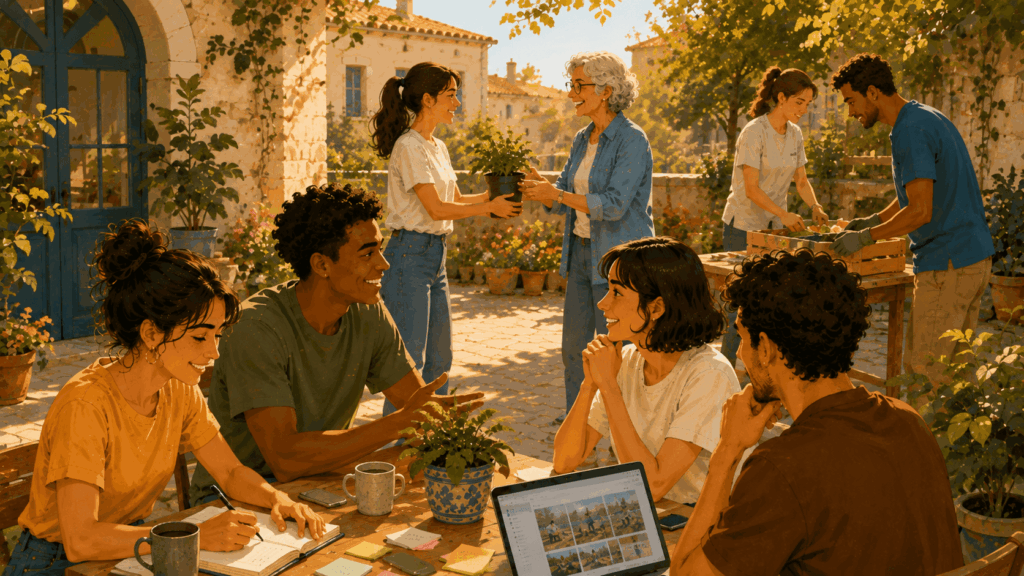
Someone who can volunteer ten hours every week is valuable. So is someone who can give thirty minutes once a month. So is the person who cannot donate but can translate. So is the person who contributes a small amount. So is the person who introduces the project to someone with exactly the expertise it needs.
When projects make room for these different forms of participation, they gain something more important than a larger volunteer list.
They create a broader sense of ownership.
People stop seeing social impact as something produced by "organizations" and supported by a small group of unusually committed individuals. They begin to see places where their own contribution can fit.
Participation grows when the first step feels possible
The question for social projects is not only how to persuade more people to care.
Many people already care.
A better question is: how easy have we made it for them to act on that care?
Can someone understand the need quickly? Can they contribute without reorganizing their entire life? Are there ways to participate without money? Can they help remotely? Can they offer a specific skill? Can they start small? Can they see what their contribution helped achieve?
When the answers are yes, participation becomes less exclusive.
And that changes the nature of social impact itself.
A strong community is not necessarily one in which everyone gives the maximum amount of time, money, or energy. It is one in which many different people can find a realistic way to contribute — and understand how their actions connect to a shared goal.
Accessibility makes that possible.
It turns helping from something people admire from a distance into something they can actually do.
Deya is not just technology. It is a way to make participation simpler, more transparent, and more accessible — so more people can turn the desire to help into meaningful action.